When your engineering team is stuck, I take ownership of the problem
Technology advisory for companies building connected hardware, voice interfaces and AI products — architecture and technology decisions, independent review, fractional R&D leadership, and structured investigation of the problems your team has not been able to close. Twenty-five years in embedded systems, IoT, voice and AI.
Four ways to work with me
Technical problem solving (TPS)
Some problems survive every internal attempt: a failure that appears once in a thousand units, a device that behaves differently in the field than on the bench, a fault that sits between the hardware, the firmware and the radio, a manufacturing defect nobody can reproduce. These are rarely solved by more engineering hours. They are solved by a disciplined investigation.
TPS is that investigation, run end to end: I take ownership of the problem, collect and read the evidence, form competing hypotheses, design the experiments that separate them, and drive the work until the root cause is established and the fix is verified. You buy a resolution and a written account of how it was reached — not engineering manpower.
I use AI tooling throughout — to read logs and captures at a scale a person cannot, to keep hypotheses and evidence in order, and to catch the cases the investigation has not yet ruled out — inside a fixed method that has been refined over twenty-five years of finding what was actually wrong.
Typical problems: intermittent failures · hardware–firmware interactions · RF and networking issues · manufacturing defects · field failures · system-level faults that cross team boundaries.
Technology advisory
A standing second opinion for founders and R&D managers: architecture decisions, technology selection, build-versus-buy, protocol and platform choices, and the question behind most of them — what this will cost to manufacture, certify and support. Usually a few hours a month.
Technical due diligence and review
An independent read of a product, a codebase or a hardware design before you commit money to it. Design review, risk map, and a written opinion you can hand to a board or an investor.
Fractional R&D leadership
For teams between heads of engineering, or that need senior direction part-time: setting the architecture, the delivery process and the release discipline, running design reviews, mentoring the team and holding the technical line with management.
Four domains, one engineering practice
IoT, smart buildings and power line monitoring
Connected systems from the board to the cloud: wireless mesh networks, RF and hardware design, and battery-powered and energy-harvesting devices. Applied to smart buildings and HVAC control — energy-saving climate control across around a hundred sites — and to power line monitoring: sensors on high-voltage transmission lines.
Grid and utility systems — DNP3 and IEC-104
A device that measures the grid is only useful once the control room can see it. I bring field devices into utility SCADA over DNP3 and IEC 60870-5-104 — stack integration inside tight memory and power budgets, transport over mesh and cellular links — and validate them against the master station. Done on high-voltage transmission-line monitoring sensors.
Voice technologies
Voice technologies since 2007 — from in-car dialogue systems shipped in production vehicles to today's real-time LLM voice pipelines — recognition, synthesis, latency, and the dialogue logic between them.
AI systems and AI-assisted engineering
AI in products and in engineering teams. I build LLM-based products — state-machine-driven voice agents, voice applications and communication trainers — where the model handles the language and ordinary engineering keeps the rules in order. And the other half: bringing AI into an engineering organisation — a sandboxed, network-isolated Claude Code environment with shared skills, hooks and team procedures, rolled out with documentation and training, so a team ships faster and securely.
Start small, decide after
1 · A conversation
Thirty minutes, free. You describe the problem; I say plainly whether I am the right person for it, and what I would do first.
2 · A scoped first step
A review, a short analysis or the opening phase of an investigation, with a written output and a fixed fee. Small enough to be worth risking on someone you have not worked with.
3 · The engagement
A TPS investigation taken through to a verified root cause, advisory on a monthly retainer, or fractional leadership at an agreed number of days a month — whichever fits the problem.
Working languages: English, Hebrew, Russian. Based in Netanya, Israel; I work with teams anywhere and travel for lab, factory and design-partner work.
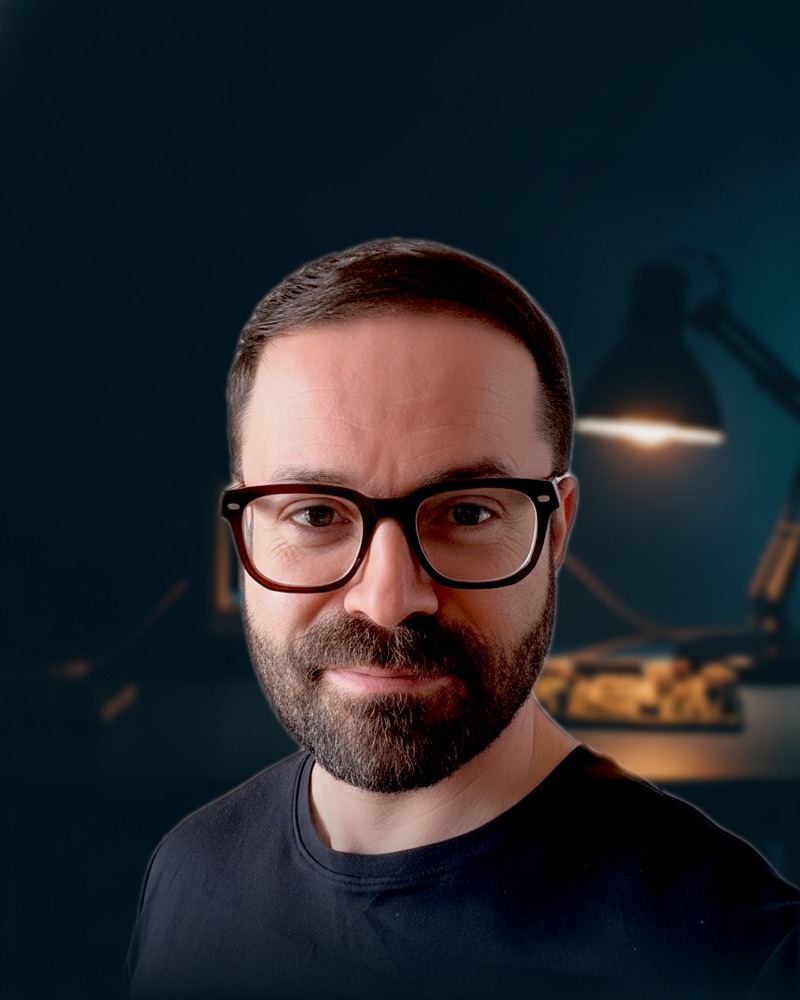
Daniel Heifetz
I am an embedded and R&D engineer and tech leader with twenty-five years of building products that ship — hardware I designed that was produced a quarter of a million times, IoT fleets in tens of thousands of devices, voice systems that reached production vehicles, and the firmware, servers and tooling around all of it. As a CTO and head of R&D I have built R&D organisations from scratch, more than once — hiring and growing the teams, setting the process, and managing the subcontractors and manufacturers who extend them — while staying in the code and in the lab, which is still where I am most useful.
I have advised companies independently since 2012, alongside and between those roles. The advisory work and the hands-on engineering feed each other: I do not give architecture advice I have not had to implement, and I do not call a problem solved until I can show why it happened.
B.Sc. in Electrical Engineering, Technion — Israel Institute of Technology, with majors in computer systems and communication.
Tell me what is stuck
The fastest way to find out whether I can help is to describe the problem in a few lines. I answer every enquiry personally, usually within a day.
Write to me- daniel.heifetz@gmail.com
- Phone
- +972-52-8305243
- Location
- Netanya, Israel